You got everything. Why isn't it enough?你什么都得到了。 为什么还是不够?
Three thousand years ago, someone with more success than you will ever have asked the same question — and refused to lie about the answer.三千年前,一个比你我都更成功的人,问了同样的问题——而且拒绝在答案上撒谎。
This is not a pressure-based religious pitch. It is an honest investigation into meaning, success, death, and the ache beneath modern life — guided by Ecclesiastes. You can come with your doubt, your exhaustion, your success, your disappointment, and simply hear what the book says first.这不是一篇劝你立刻相信的宗教文章,而是一场关于人生意义的诚实调查。你可以带着怀疑、疲惫、成功、失望,先听听《传道书》怎么说。
Scripture · Chinese: Chinese Union Version (和合本) · English: King James Version (KJV) — both public domain. These are selected passages (some verses omitted for length). Where other versions (e.g. CSB) are cited for comparison, they are labeled separately. The guide and reflections are prepared for this site and are not part of the Bible translation.经文 · 中文:和合本 · 英文:King James Version(KJV)——均为公有领域。此为经文选读(部分节次因篇幅略去)。文中若引用其他译本(如 CSB)作对照,均单独标注。导读与默想由本站整理,不属于圣经译文。
Start anywhere从哪里开始都可以
How to use this site你可以这样使用这个网站
There's no single right order. Come in wherever you actually are.没有唯一正确的读法。你此刻在哪里,就从哪里进来。
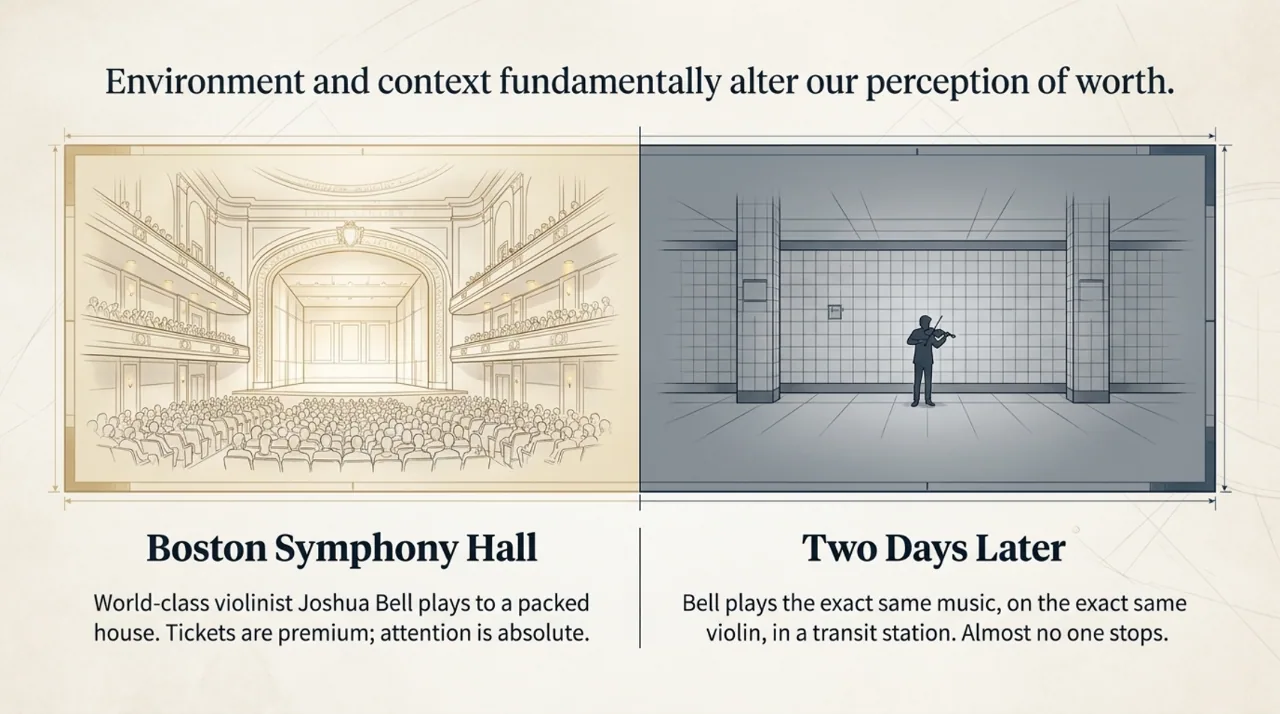
The same violin. The same player. A different room.同一把琴。同一个人。换了个房间。
Boston Symphony Hall波士顿交响音乐厅
A full house座无虚席
World-class violinist Joshua Bell plays to a packed hall. Tickets are premium. Attention is absolute.世界级小提琴家约书亚·贝尔登台演出,门票昂贵,全场屏息,无一分心。
A subway station · two days later地铁站 · 两天后
Almost no one stops几乎无人驻足
The same man plays the same music on the same violin, in a transit station. Almost nobody slows down.同一个人,同一把琴,同一首曲子,换到地铁站。几乎没人放慢脚步。
Nothing about the music changed. Only the setting did — and the setting decided what people thought it was worth. That should unsettle you: how much of what you chase is valued for what it is — and how much for the room you're standing in?音乐本身一分一毫没变。变的只是场景——而场景,决定了人们觉得它"值多少"。这该让你有点不安:你拼命追逐的东西,有多少是因为它本身的价值,又有多少,只是因为你此刻站的那个房间?
This book asks that question about your whole life — and it does it with one strange little word.这本书,把这个问题问向你的整个人生——而它,只用了一个奇怪的小词。
From the sermon deck · Beyond the Vapor取自讲道幻灯片 · Beyond the Vapor
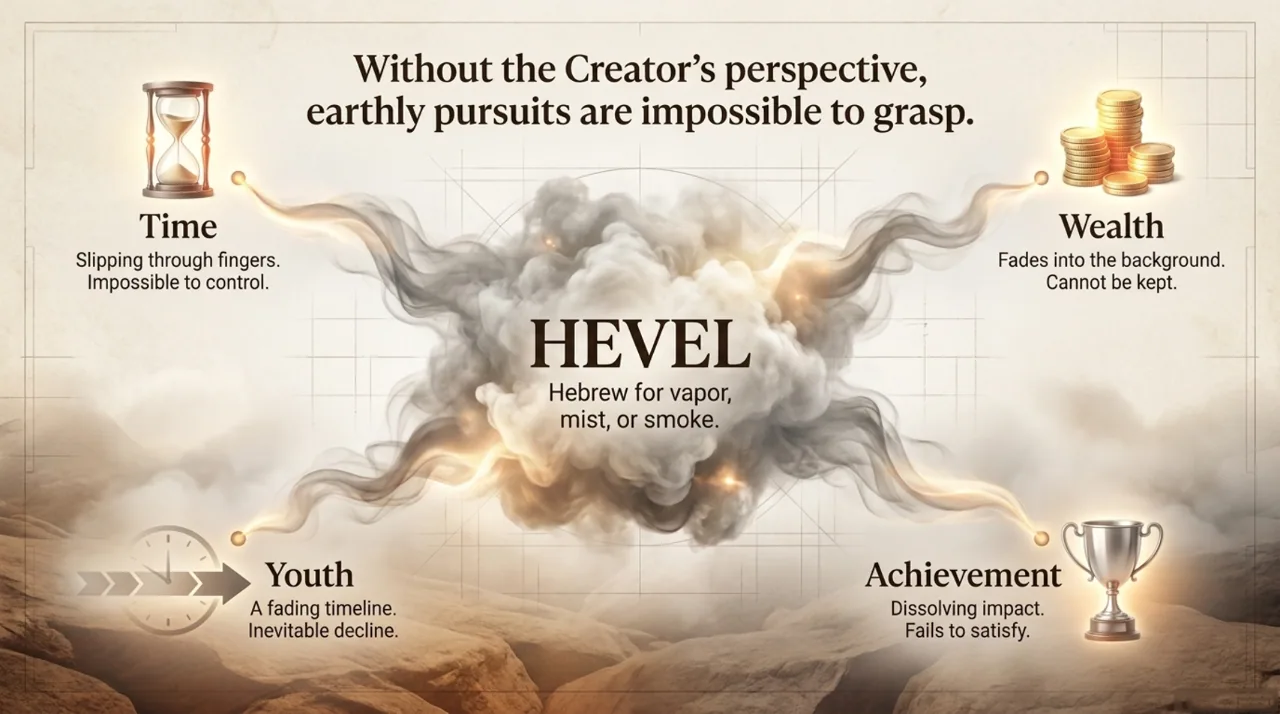
The word you misread你读错的那个词
"Vanity of vanities… all is vanity.""虚空的虚空,凡事都是虚空。"
Ecclesiastes 1:2 · 传道书 1:2
You think you know this line. You don't. The word translated "vanity" is the Hebrew hevel — and it does not mean "worthless."你以为你懂这句话。其实没有。被译成"虚空"的那个词,是希伯来文 hevel——它的意思不是"没有价值"。
The point isn't that life is worthless. It's that life is unkeepable — a breath you cannot hold, mist you cannot grip. Everything good is real, and slips through your fingers anyway. That is a far more uncomfortable, and far more honest, idea.重点不是人生没有价值,而是人生留不住——像一口呼出的气,握不住;像薄雾,抓不牢。一切美好都是真实的,却照样从指缝里溜走。这是一个远更扎心、也远更诚实的想法。
The book has another key phrase that appears nearly 30 times: "under the sun." It means life seen from a purely earthly angle — no God, no eternity, just this. The whole book honestly follows that worldview all the way to its end.全书还有另一个关键词组,出现了将近 30 次:"日光之下"。它指的是纯粹从地上、从世俗的角度看人生——没有神、没有永恒,就只有眼前这些。整卷书,就是诚实地把这个世界观走到底。
From the sermon deck · Beyond the Vapor取自讲道幻灯片 · Beyond the Vapor
A note for readers of Chinese给中文读者的一点辨析
"Vanity" is not the "emptiness" (空) of Eastern philosophy《传道书》的「虚空」,不等于东方哲学里的「空」
Many Chinese readers naturally hear echoes of the Buddhist or Eastern idea of "emptiness" (空) in the word "vanity." Buddhist thought is itself rich and varied, and different traditions understand 空 in different ways. The point here is not to judge Buddhism, but to clarify one thing: the hevel of Ecclesiastes does not say the world is an illusion, nor does it tell you to escape reality. It says something closer to this — the world is real and good, yet fleeting, ungraspable, and never finally in our control.很多中文读者容易把"虚空"联想到佛教或东方哲学里的"空"。当然,佛教传统本身很复杂,不同宗派对"空"的理解也不完全相同。这里不是要评判佛教,而是要说明:《传道书》的 hevel 不是说世界本质为幻,也不是叫人逃离现实;它更像是在说:世界真实、美好,却短暂、易逝、不能被人最终掌控。
One common reading of 空"空"常被理解成
tends toward: illusion, letting go倾向:看空、放下、出世
the world is, in essence, illusory世界在本质上是虚妄、是幻象
peace comes by seeing through and releasing安顿之道在于看破、放下
desire itself is a root of suffering欲望本身是苦的根源
freedom is found by stepping away from it all解脱在于离开这一切
Ecclesiastes' "vanity" (hevel)《传道书》的「虚空」(hevel)
real, yet unkeepable真实,却留不住
the world is real, and originally good世界是真实的,且本是好的
not withdrawal, but receiving life as it is不出世,反而要入世去领受
eating, working, family — these are good gifts吃喝、劳作、家庭都是好的
the ache isn't "having" — it's "cannot keep"问题不在"有",而在"抓不住"
Ecclesiastes does not negate the world or urge you to withdraw from it. It does the opposite — it affirms that created things are good, and tells you to receive your food, your work, and your people as gifts from God's hand (2:24). It doesn't say "all is illusion, so let go"; it says "all is real, yet cannot be held — so receive today all the more tenderly."传道书不否定世界,也不叫人出世。它反过来肯定:受造之物是好的,要人把吃饭、工作、家人,当作神的礼物来领受(2:24)。它说的不是"一切是幻、所以放下",而是"一切是真、却抓不住,所以更要珍惜地领受当下"。
This is a broad sketch, offered with respect — not a full account of any tradition. If you come from a Buddhist background, read it as an invitation to compare honestly, not as a verdict on your path.以上只是怀着尊重画的一个粗略轮廓,并不能代表任何一个传统的完整面貌。如果你有佛教背景,请把它当作一次诚实的对照邀请,而不是对你所走之路的评判。
What you cannot hold is not necessarily unreal; perhaps it was never meant to be possessed.你抓不住的,不一定是假的;也许它本来就不是让你占有的。
Theme · the first doorway主题 · 第一道门
The emptiness of success成功的空洞
This is a first-person experiment report. The author had unlimited money, talent, and freedom — and he ran the experiment you're quietly running on yourself. Here is his lab notebook.这是一份第一人称的实验报告。作者拥有无限的金钱、才干和自由——他亲手做了那个你正在悄悄拿自己做的实验。下面是他的实验记录。
"I tried pleasure — I told myself, go ahead, enjoy. And it was vapor.""我试了享乐——我对自己说:来吧,尽情享受。结果是一口气。"2:1
"I tried building — houses, vineyards, gardens, pools, an estate greater than anyone before me.""我试了建造——房屋、葡萄园、园囿、水池,一份胜过前人的家业。"2:4–6
"I tried wealth — silver, gold, the treasure of kings. I withheld from myself nothing my eyes desired.""我试了财富——金银、君王的财宝。凡我眼所求的,我没有一样留下不给自己。"2:8,10
"Then I looked at everything my hands had done… and it was all vapor, all chasing the wind, and there was no gain under the sun.""后来我察看我手所做的一切……谁知都是一口气,都是捕风,在日光之下毫无益处。"2:11
He didn't fail to get the things. He got all of them. That's what makes this land: it removes the excuse "I'd be satisfied if I just had a little more." He had immeasurably more — and named the feeling out loud.他不是没得到那些东西。他全得到了。正因如此才扎心:它拿掉了那句"只要我再多一点就满足了"的借口。他多得无法计量——然后把那种感觉说了出来。
If you're a Chinese parent building a life in the US — on the immigrant "treadmill of achievement," giving your children everything, and still quietly tired, still sensing it isn't enough — this book isn't preaching at you. It's saying out loud the sentence you never let yourself say.如果你是在美打拼的华人父母——移民式的"成就跑步机",为下一代拼,什么都给到了,却隐隐觉得还是累、还是不够——这本书不是在说教,它是在替你把那句没说出口的话说出来。
Read the actual passage below, in the original wording, and decide for yourself.下面读一读真正的经文,用它本来的措辞,自己判断。
1I said in mine heart, Go to now, I will prove thee with mirth, therefore enjoy pleasure: and, behold, this also is vanity.
2I said of laughter, It is mad: and of mirth, What doeth it?
4I made me great works; I builded me houses; I planted me vineyards:
5I made me gardens and orchards, and I planted trees in them of all kind of fruits:
8I gathered me also silver and gold, and the peculiar treasure of kings and of the provinces…
10And whatsoever mine eyes desired I kept not from them, I withheld not my heart from any joy… and this was my portion of all my labour.
11Then I looked on all the works that my hands had wrought… and, behold, all was vanity and vexation of spirit, and there was no profit under the sun.
1我心里说:来吧,我以喜乐试试你,你好享福!谁知,这也是虚空。
2我指嬉笑说:这是狂妄。论喜乐说:有何功效呢?
4我为自己动大工程,建造房屋,栽种葡萄园,
5修造园囿,在其中栽种各样果木树;
8我又为自己积蓄金银和君王的财宝,并各省的财宝……
10凡我眼所求的,我没有留下不给它的;我心所乐的,我没有禁止不享受的……这就是我从劳碌中所得的分。
11我察看我手所经营的一切事和我劳碌所成的功。谁知都是虚空,都是捕风;在日光之下毫无益处。
Text: KJV (public domain) & Chinese Union Version (和合本). Verses 3, 6–7, 9 omitted for length — the full chapter is one click away in a finished build.经文:KJV(公有领域)与和合本。为篇幅略去第 3、6–7、9 节——完整章节在正式版本中一键可读。
Success can fill your calendar and empty your soul.成功可以填满日程,却掏空灵魂。
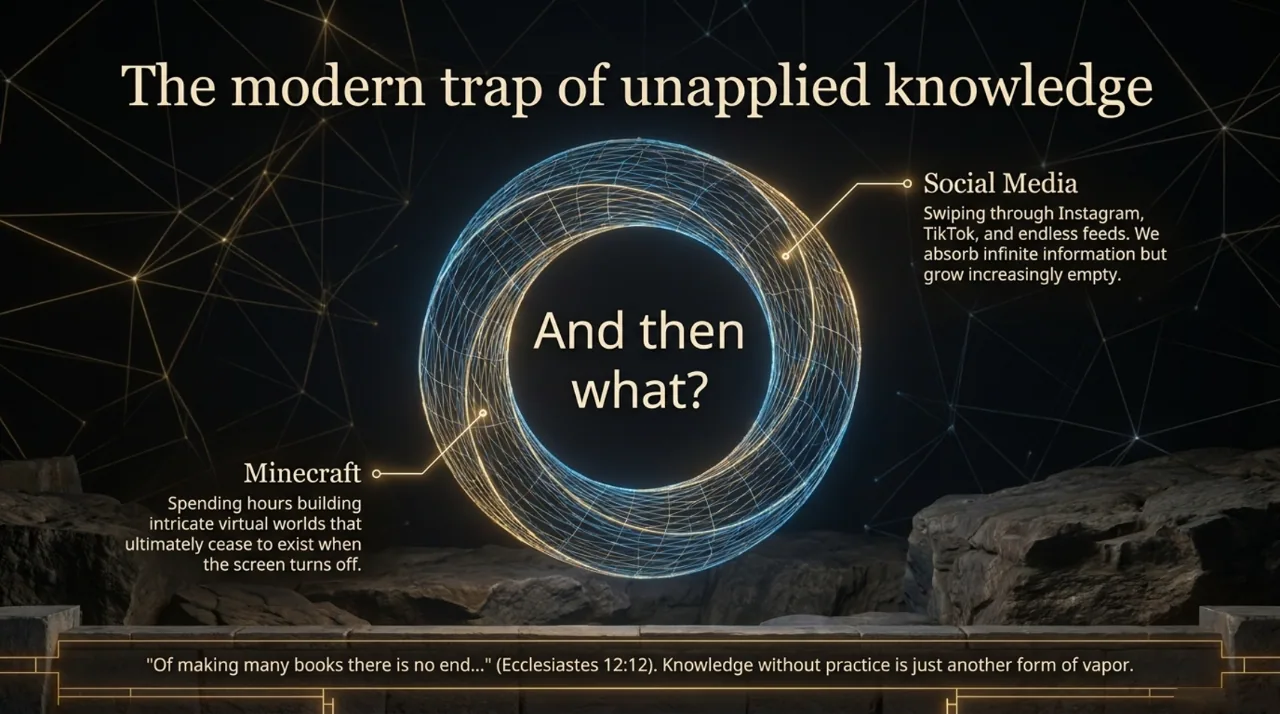
A modern trap一个现代的陷阱
"And then what?""然后呢?"
The book saw it coming three thousand years early: "Of making many books there is no end." Today the feed has no end either. You can scroll, binge, and absorb forever — and feel emptier the more you take in. Information without a place to land is just another kind of vapor.这本书三千年前就看见了:"著书多,没有穷尽。" 今天的信息流也一样没有尽头。你可以无限刷、无限看、无限吸收——却越吸收越空。没有落点的信息,只是另一种"一口气"。
Ecclesiastes 12:12 · 传道书 12:12
The endless feed没有尽头的信息流
No conclusion, no rest没有结论,没有安歇
Social media, the next series, the next build — it never reaches a final stopping point, and offers no final rest.社交媒体、下一部剧、下一个项目——永远到不了终点,也给不了真正的安歇。
A book with an ending一本有结尾的书
It actually concludes它真的会收束
This one is twelve short chapters with a beginning, a middle, and a deliberate end — it stops, and asks you to as well.这一本,十二个短章,有始、有中、有刻意的结尾——它会停下来,也请你停下来。
Knowledge you never live out doesn't fill you — it hollows you. The book's last move isn't "learn more." It's "now do something with it."你从不去活出来的知识,不会填满你——只会把你掏空。这本书最后那一步,不是"再多学一点",而是"现在,拿它去做点什么"。
From the sermon deck · Beyond the Vapor取自讲道幻灯片 · Beyond the Vapor
The whole book at a glance整卷书一眼看懂
A 12-chapter roadmap through Ecclesiastes《传道书》12 章人生路线图
Twelve short chapters. You could read one a day and finish the whole book in twelve days.十二个短章。你可以每天读一章,12 天读完整卷书。
Chapter 1第 1 章
Cycles of life, and the search for what is truly new一切循环,人找不到终极的新意
Chapter 2第 2 章
Pleasure, achievement, and wealth cannot be held享乐、事业、财富都抓不住
Chapter 3第 3 章
A time for everything, and eternity in the human heart凡事有时,永恒在人心里
Chapter 4第 4 章
Competition, loneliness, and oppression竞争、孤独、压迫
Chapter 5第 5 章
Money cannot satisfy the soul钱不能满足人
Chapter 6第 6 章
Possession is not the same as enjoyment拥有不等于享受
Chapter 7第 7 章
Wisdom learns to face death智慧面对死亡
Chapter 8第 8 章
Delayed justice and human confusion公义延迟,人心困惑
Chapter 9第 9 章
Death comes to all死亡临到众人
Chapter 10第 10 章
How folly damages life愚昧如何破坏人生
Chapter 11第 11 章
Acting faithfully amid uncertainty在不确定中仍然行动
Chapter 12第 12 章
Remember your Creator while you are young趁年轻记念造你的主
Notice the shape: it doesn't end in despair. It moves through everything that can't be kept — and lands on "remember your Creator." The honesty is the road; it isn't the destination.留意它的形状:它不是终于绝望,而是走过一切留不住的东西之后,落在"记念造你的主"。诚实是那条路,却不是终点。
The ache is not the enemy. It may be the doorway.那种空,不一定是敌人;它可能是一扇门。
Ask anything · the heart of this site随便问 · 本站的核心
Ask the doubts you'd be ashamed to say out loud问出那些你羞于说出口的疑问
This is where a screen beats a person. Be hostile, be skeptical — that's welcome here. Tap a question to begin, or type your own.这正是屏幕胜过真人的地方。带着敌意、带着怀疑来问——这里欢迎。点一个问题开始,或者自己输入。
🔒 This assistant only answers from the book of Ecclesiastes and its links to the wider Bible. It cites chapter-and-verse for every claim, and never asserts a verse it hasn't retrieved.🔒 这个助手只从传道书、以及它与全本圣经的关联来回答。每条主张都标出章节,绝不凭记忆断言未检索的经文。
Common questions people actually ask:大家真正会问的问题:
⚙️ Demo note: answers below are drawn from a small built-in, verse-grounded set to show the experience. In the real build this is a retrieval-augmented model constrained to the Ecclesiastes corpus — the buildable piece your system prompt enforces ("never assert an unretrieved verse").⚙️ 演示说明:下面的回答取自一个内置的、扎根经文的小型集合,用来展示体验。正式版本中,这里是一个被约束在传道书语料内的检索增强模型——也就是你的系统提示词所强制的那块("绝不断言未检索的经文")。
If you want to go further如果你想再走一步
The book diagnoses. It doesn't prescribe.传道书负责诊断,不负责开药。
Ecclesiastes pushes the closed system of "under the sun" to its limit, digs out the human longing for permanence — and then stops, honestly, without a final answer. What's below is opt-in. Open it only if you want to.传道书把"日光之下"这个封闭系统逼到极限,挖出人对"永恒"的渴望——然后诚实地停在那里,不给最终答案。下面的内容是自选的,只有你想看,才打开。
The bridge, said carefully这座桥,说得稳妥一点
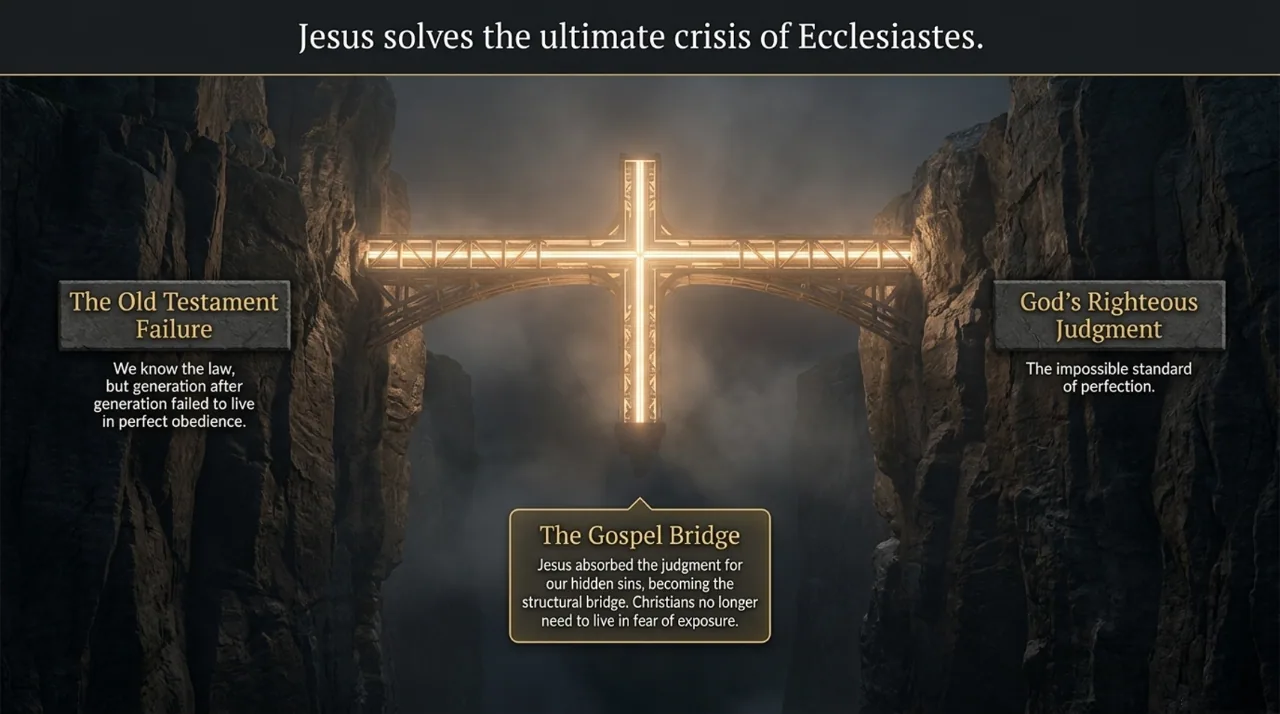
Ecclesiastes is not a book that speaks directly about Jesus in every line. It first exposes the honest dilemma of life "under the sun." But within the whole story of Scripture, the questions Ecclesiastes raises find their deepest answer in Christ: death is not the final word, human labor is not the final destination, and the longing for eternity placed in the human heart is not a cruel joke.《传道书》本身不是直接讲耶稣的书;它先诚实地揭开"日光之下"的困境。但从整本圣经来看,它提出的问题,最终在基督里得到回应:死亡不是最后一句话,人的劳苦不是最终归宿,神放在人心里的永恒渴望不是一个残酷的玩笑。
Read the bridge from emptiness toward an answer读一读:从虚空通向答案的那座桥optional自选
One verse is the pier of the bridge: "He has set eternity in the human heart" (3:11). Interestingly, KJV renders the same Hebrew word olam as "the world," and 和合本 as "永生 / 永远." The book admits we carry a sense of forever we can't satisfy from inside this system.有一节经文是这座桥的桥墩:"神将永恒安置在世人心里"(3:11)。有意思的是,同一个希伯来词 olam,KJV 译成"世界",和合本译成"永生/永远"。这本书承认:我们心里揣着一种"永远"的感觉,却无法在这个系统内部把它填满。
The honest bridge: Ecclesiastes excavates the longing; the New Testament claims the answer comes from above the sun — from outside the closed system. The book admits death zeroes everything out (9:5–6). The New Testament's reply is precisely something beyond death. In 1 Corinthians 15, Paul nearly quotes Ecclesiastes' "eat and drink, for tomorrow we die" — and flips it entirely.这座桥是这样搭的:传道书把渴望挖出来;新约宣称,答案来自"日光之上"——来自这个封闭系统之外。传道书诚实承认死亡让一切归零(9:5–6);而新约的回应,恰恰是死亡之外的东西。在哥林多前书 15 章,保罗几乎直接引用了传道书"吃喝吧,因为明天要死"那句话——却把它整个翻转过来。
No bait-and-switch. Ecclesiastes is not secretly about Jesus, and we won't pretend it is. This is simply where the road, followed honestly, arrives.不偷换概念。传道书并不是暗地里在讲耶稣,我们也不假装它是。这只是那条路,诚实地走下去,所抵达的地方。
From the sermon deck · Beyond the Vapor取自讲道幻灯片 · Beyond the Vapor
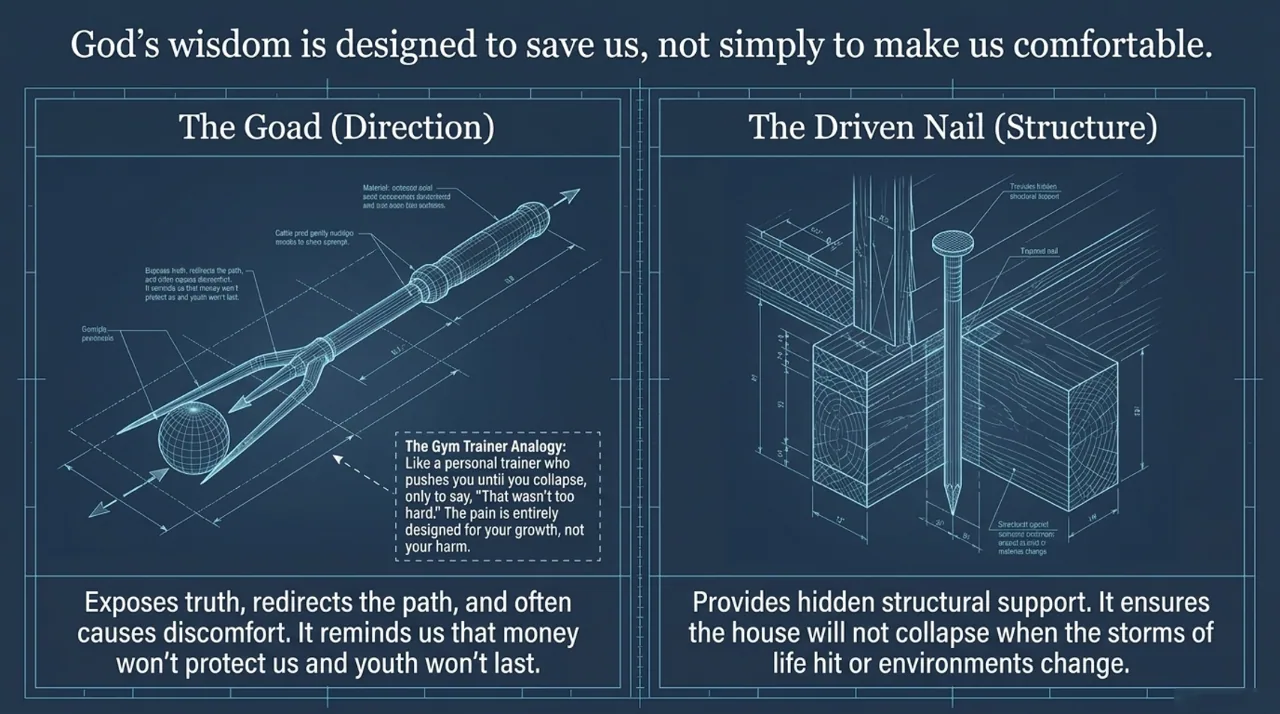
Two images from the book's last chapter: the goad & the nail书末两个意象:赶牛的刺 & 钉牢的钉子optional自选
Ecclesiastes 12:11 calls wise words "goads" and "firmly embedded nails." A goad is a sharp stick that prods cattle in the right direction — it's meant to sting. The book's honesty about money, youth and death isn't there to comfort you; it's there to correct your course before you waste the whole trip.传道书 12:11 把智慧之言称为"刺棒(赶牛的刺)"和"钉稳的钉子"。刺棒是赶牲口、纠正方向用的——它本就该刺痛。这本书对金钱、青春、死亡的诚实,不是来安慰你的,而是趁你还没把整趟路走废之前,纠正你的方向。
A driven nail is hidden, but it holds the structure together. A life built on "vapor" looks impressive and collapses in the first real storm; a life built on something solid stays standing when the weather turns. The question the book leaves you with isn't "are you successful?" — it's "what is your house actually nailed to?"钉稳的钉子是隐藏的,却把整个结构撑住。建在"一口气"上的人生,外表光鲜,第一场真正的风暴就塌;建在坚固之物上的人生,天气变了仍然站立。这本书留给你的问题不是"你成功了吗?"——而是"你的房子,究竟钉在什么上面?"
From the sermon deck · Beyond the Vapor取自讲道幻灯片 · Beyond the Vapor
Ecclesiastes does not ask you to give up on life; it asks you to stop making life your god.《传道书》不是要你放弃人生,而是要你停止把人生当成神。
A worship response · optional敬拜回应 · 自选
Songs for the Journey Beyond the Sun陪你走出日光之下的诗歌
Ecclesiastes helps us face the emptiness honestly; worship helps us bring that emptiness before God.《传道书》让我们诚实面对人生的空;诗歌帮助我们把这个空带到神面前。
Classic Hymns经典圣诗
Amazing Grace · 奇异恩典
Traditional hymn · John Newton, 1779传统圣诗 · 约翰·牛顿,1779
When to listen适合心境
When you feel lost, tired, and long to be found by grace again.当你觉得自己迷失、疲惫、需要重新被恩典找回。
Ecclesiastes connection和《传道书》的连接
Ecclesiastes shows we cannot hold on to life through achievement, wealth, or wisdom. Amazing Grace points to a deeper answer: it is not that we grasp God — grace found us first.《传道书》让人看见自己无法靠成就、财富、智慧抓住生命;《奇异恩典》把人带到一个更深的答案:不是我抓住神,而是恩典先找到了我。
A hymn of grace for the lost, tired, and searching soul.这是一首关于「被恩典找回」的圣诗,适合那些觉得自己努力很多、却仍然迷失的人。
Show lyrics展开歌词
Amazing grace! how sweet the sound,
That saved a wretch like me!
I once was lost, but now am found,
Was blind, but now I see.
'Twas grace that taught my heart to fear,
And grace my fears relieved;
How precious did that grace appear
The hour I first believed.奇异恩典,何等甘甜,
我罪已得赦免;
前我失丧,今被寻回,
瞎眼今得看见。
如此恩典,使我敬畏,
使我心得安慰;
初信之时,即蒙恩惠,
真是何等宝贵。
Public domain · John Newton, 1779公有领域 · 约翰·牛顿,1779
May this song help you become still for a moment and bring your burdens before God.愿这首诗歌陪你安静片刻,把心里的重担交给神。
Be Thou My Vision · 成为我异象
Traditional Irish hymn · translated 1905传统爱尔兰圣诗 · 1905 译
When to listen适合心境
When you want to reorder your priorities, and stop being pulled along by success, anxiety, and comparison.当你想重新整理人生优先次序,不想再被成功、焦虑和比较牵着走。
Ecclesiastes connection和《传道书》的连接
Ecclesiastes says nothing under the sun can be held. This hymn becomes a prayer: that God himself would be my true vision, wisdom, and direction.《传道书》说,日光之下的一切都抓不住;这首诗歌帮助人祷告:愿神自己成为我真正的异象、智慧和方向。
A prayer for God to become the center, vision, and wisdom of life.当人生被太多目标、焦虑和比较占满时,这首诗歌像一个祷告:主啊,成为我的异象。
Show lyrics展开歌词
Be Thou my Vision, O Lord of my heart;
Naught be all else to me, save that Thou art;
Thou my best thought, by day or by night,
Waking or sleeping, Thy presence my light.
Riches I heed not, nor man's empty praise,
Thou mine inheritance, now and always;
Thou and Thou only, first in my heart,
High King of heaven, my treasure Thou art.成为我异象,我心所仰望;
万事皆虚空,惟主是希望;
愿你居首位,日夜导引;
或睡或睡醒,慈容作光明。
财富我不慕,虚名亦不求;
你是我基业,现今永长久;
惟你居首位,在我心中;
天上大君王,你是我珍宝。
May this song help you become still for a moment and bring your burdens before God.愿这首诗歌陪你安静片刻,把心里的重担交给神。
Be Still, My Soul · 我灵镇静
Katharina von Schlegel · tune "Finlandia" (Sibelius)冯·施莱格尔 · 曲调「芬兰颂」(西贝柳斯)
When to listen适合心境
When you are anxious, unsettled, grieving, or in a season of waiting.当你焦虑、不安、心里很乱,或者正在经历等待。
Ecclesiastes connection和《传道书》的连接
Ecclesiastes says there is a time for everything, and we cannot control it all. This hymn reminds us that even when we cannot control, we can still be still in God.《传道书》说「凡事都有定期」,人无法掌控所有时间;这首诗歌提醒人,在不能掌控的时候,仍然可以在神里面安静。
A hymn for anxiety, waiting, grief, and surrender.这是一首适合在焦虑和等待中听的诗歌,提醒人不是所有事情都能立刻解决,但心可以慢慢安静在神面前。
Show lyrics展开歌词
Be still, my soul: the Lord is on thy side;
Bear patiently the cross of grief or pain;
Leave to thy God to order and provide;
In every change He faithful will remain.
Be still, my soul: thy best, thy heavenly Friend
Through thorny ways leads to a joyful end.我灵镇静!主正在你身旁;
忍耐担当,如同我主受苦;
凡事交托,任凭我神安排;
无论万变,主信实永不改。
我灵镇静!你天上的良友,
历尽荆棘,引你进入安歇。
Public domain · Katharina von Schlegel; trans. Jane Borthwick, 1855公有领域 · 冯·施莱格尔;Jane Borthwick 1855 英译
May this song help you become still for a moment and bring your burdens before God.愿这首诗歌陪你安静片刻,把心里的重担交给神。
Modern Worship现代敬拜
Still · 安静
Hillsong Worship · Reuben MorganHillsong Worship · Reuben Morgan
When to listen适合心境
When the waves feel high and life feels unstable, and you need to be still and trust again.当你感到风浪很大,人生不稳定,需要重新安静信靠神。
Ecclesiastes connection和《传道书》的连接
Ecclesiastes reveals that we cannot control the world. This song responds: even while the storm remains, I can be still in God.《传道书》揭示人无法掌控世界;这首歌回应的是:即使风浪仍在,我仍可以在神里面安静。
A worship song for stillness, surrender, and trust.适合在焦虑、风浪、不确定的时候听,帮助人从「我要控制一切」慢慢回到「我愿意信靠神」。
May this song help you become still for a moment and bring your burdens before God.愿这首诗歌陪你安静片刻,把心里的重担交给神。
Goodness of God · 神的良善
Bethel Music · Jenn JohnsonBethel Music · Jenn Johnson
When to listen适合心境
When you look back on life — with its losses, tears, and unanswered questions — and still want to trace the marks of grace.当你回看人生,虽然有失落、眼泪和不明白,但仍想寻找神的恩典痕迹。
Ecclesiastes connection和《传道书》的连接
Ecclesiastes admits that much of life cannot be explained. This song helps us look back and see that, in a life we cannot fully understand, God has still been good.《传道书》承认人生有很多不能解释的部分;这首歌帮助人回望:在无法完全理解的人生里,神仍然良善。
A song of remembrance, gratitude, and trust in God's goodness.这首歌适合在回顾人生的时候听,帮助人看见:即使人生有很多不明白,神的良善仍然一路跟随。
May this song help you become still for a moment and bring your burdens before God.愿这首诗歌陪你安静片刻,把心里的重担交给神。
Yet Not I But Through Christ in Me · 不再是我,乃是基督
CityAlightCityAlight
When to listen适合心境
When you feel you cannot hold on by your own strength, and need strength from Christ.当你觉得靠自己撑不下去,需要从基督得力量。
Ecclesiastes connection和《传道书》的连接
Ecclesiastes shows that relying on ourselves is finally limited. This song brings us into Christ: it is not that I complete my own life — Christ lives in me.《传道书》让人看见「靠自己」最终有限;这首歌把人带到基督里:不是我自己完成生命,而是基督在我里面活着。
A Christ-centered song for strength, endurance, and hope.这是一首很适合连接福音核心的诗歌:人生不是靠自己撑到底,而是在基督里得着新的力量和盼望。
May this song help you become still for a moment and bring your burdens before God.愿这首诗歌陪你安静片刻,把心里的重担交给神。
Songs are provided here as a worship and reflection guide. Full lyrics are shown only for public-domain classic hymns (Chinese translations follow common hymnal versions and may vary slightly). Copyrighted worship songs remain the property of their respective authors and publishers; for those, this site does not reproduce lyrics and only links to publicly available listening sources.本页诗歌仅作为信仰探索与敬拜引导。站内仅对公有领域的经典圣诗展示完整歌词(中文歌词依常见诗歌本,版本或略有出入)。现代敬拜歌曲版权归原作者与版权方所有,本站不复制其歌词,仅提供公开收听链接。
The full visual summary完整图解
See the whole thing, slide by slide一页一页,看完整套图解
This site draws on a designed visual summary of the Ecclesiastes 12 sermon. You can view the complete deck — every slide, in order.本站取材于《传道书》12 章讲道的视觉总结。你可以浏览完整的一套幻灯片——每一页,依序呈现。
If a face came to mind while you read, this last part is for them.如果你读的时候,脑海里浮现了某张脸——最后这部分,是为他/她准备的。
·People who look successful but feel tired inside事业成功但内心疲惫的人
·Parents anxious about children, housing, identity, and the future为孩子、房子、身份、未来一直焦虑的父母
·Skeptics who are not ready for religion but willing to think about meaning对宗教有防备,但愿意思考人生意义的人
·People facing midlife questions, loss, or emptiness正在经历中年危机、失落、空虚的人
·People who want to read the Bible but don't know where to begin想读圣经,但不知道从哪里开始的人
·Chinese-speaking families living, working, and raising children in the United States在美国生活、打拼、养育孩子,却常常感到心累的华人家庭
If this helped you even a little, you're welcome to send the link to one person — no message required. Sometimes a quiet door is the kindest thing you can hand someone.如果这里对你哪怕有一点帮助,欢迎把链接发给一个人——不用配什么话。有时候,递给别人一扇安静的门,已经是最温柔的事。
Next steps · no pressure下一步 · 不施压
If you want to take one more step如果你愿意继续走一步
Read读
Read one chapter读一章
Start with Ecclesiastes chapter 1 and read one chapter a day — twelve days for the whole book.从《传道书》第 1 章开始,每天读一章,12 天读完整卷书。
Ask问
Ask one honest question问一个问题
Write down the question you actually carry inside. It doesn't need to be dressed up in spiritual language.把你心里最真实的问题写下来,不需要包装得很属灵。
Talk聊
Talk to someone找一个人聊聊
Send this site to a Christian friend you trust and ask, "What do you think about this?"你可以把这个网站发给一个你信任的基督徒朋友,问:"你怎么看这个问题?"
Visit走进
Visit a church走进一间教会
If you're in Orange County, you might consider visiting Mariners Church — or simply look for a Bible-based church near you. Go quietly, at your own pace.如果你在 Orange County,可以了解 Mariners Church,也可以寻找附近以圣经为根基的教会。安静地去,按自己的节奏。
Rest缓
Don't rush the conclusion先不用急着下结论
You can begin with questions, doubts, and tiredness. You don't owe anyone an answer today.你可以带着问题、怀疑和疲惫,慢慢开始。今天不欠任何人一个答案。
If this has stirred up something heavy如果这唤起了某种沉重的东西
A book about emptiness and death can surface real pain. If you're thinking about harming yourself or feel you can't go on, please reach a person now — not a verse. In the US, call or text 988 (Suicide & Crisis Lifeline, 24/7, free, confidential), or text HOME to 741741. If you're in immediate danger, call 911. You deserve to talk to someone real.一本关于空虚与死亡的书,可能会勾起真实的痛苦。如果你有伤害自己的念头,或觉得撑不下去了,请现在去找一个人——而不是一节经文。在美国,可拨打或发短信至 988(自杀与危机生命热线,全天候、免费、保密),或发送 HOME 到 741741。若有即时危险,请拨打 911。你值得和一个真实的人说说话。
Under the sun, we cannot hold eternity; yet within the heart, we still long for it.日光之下,人抓不住永恒;但人心里,仍然渴望永恒。